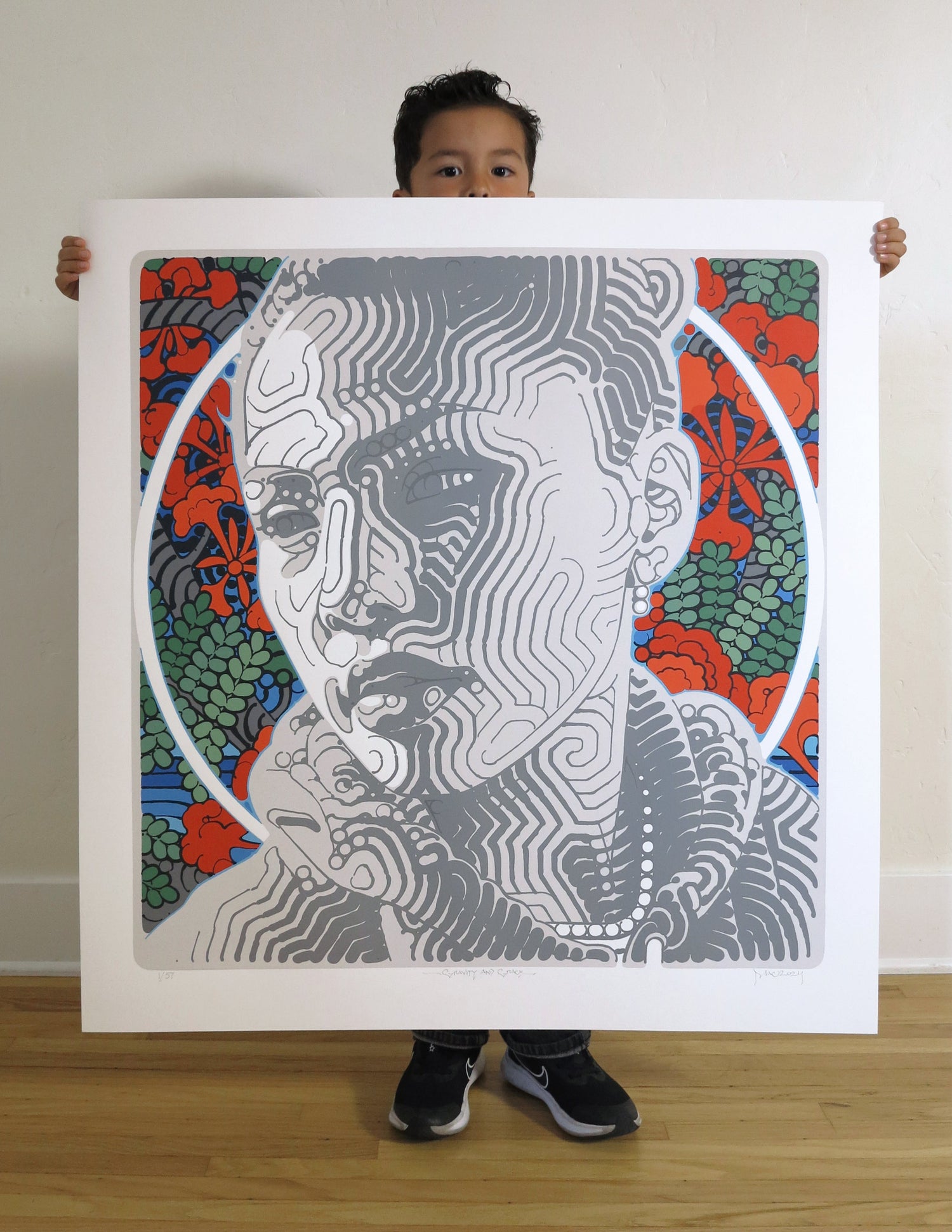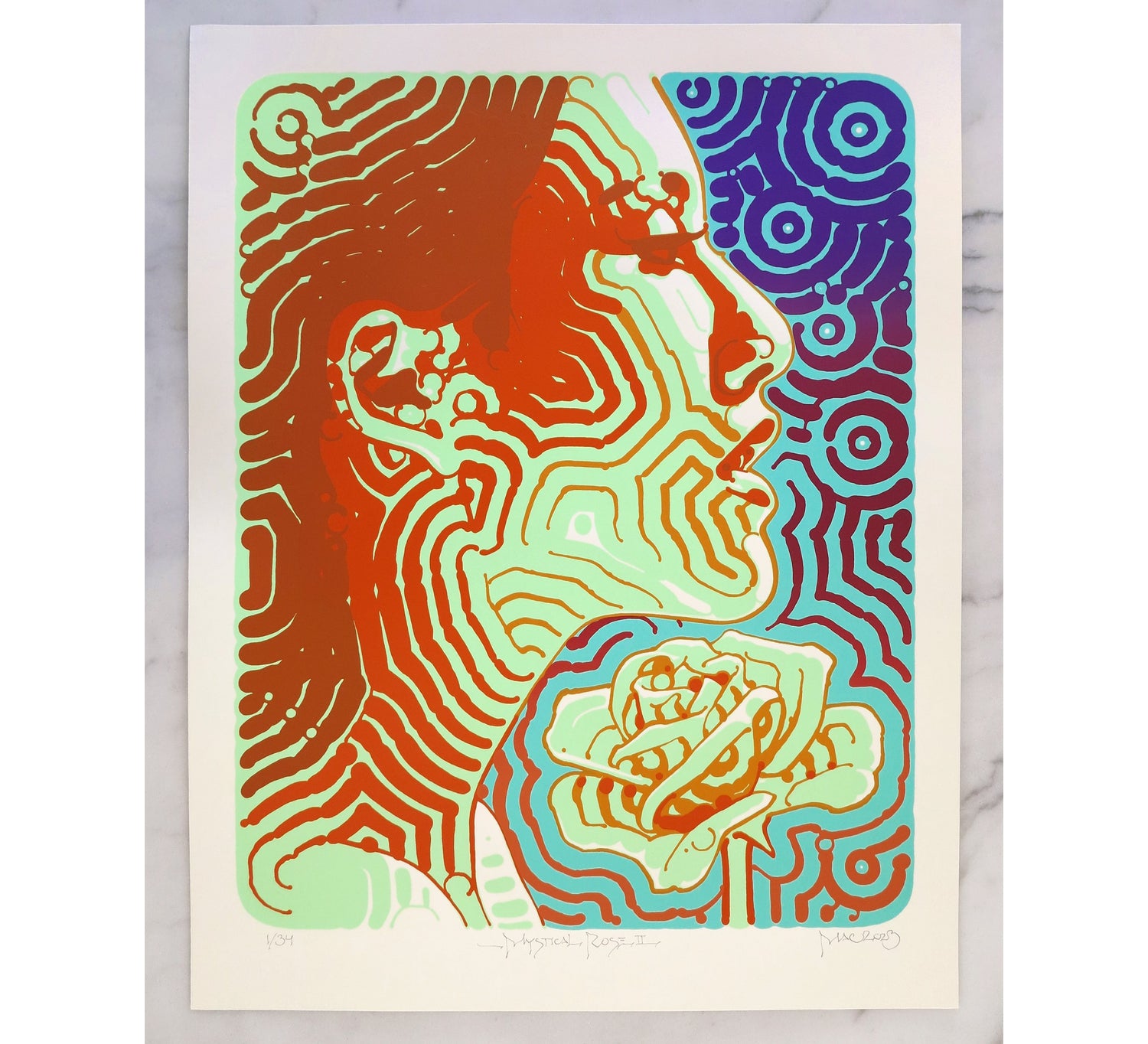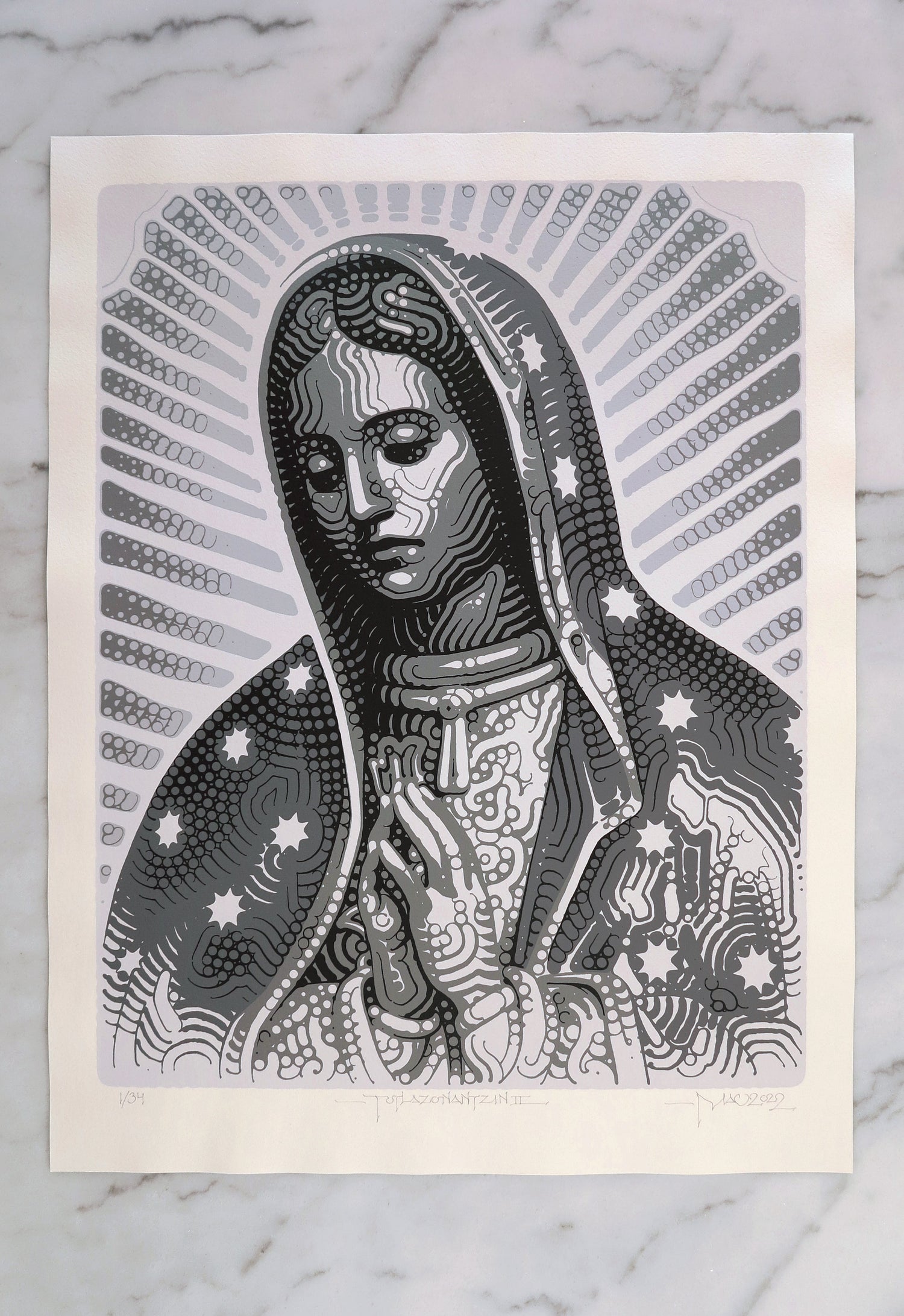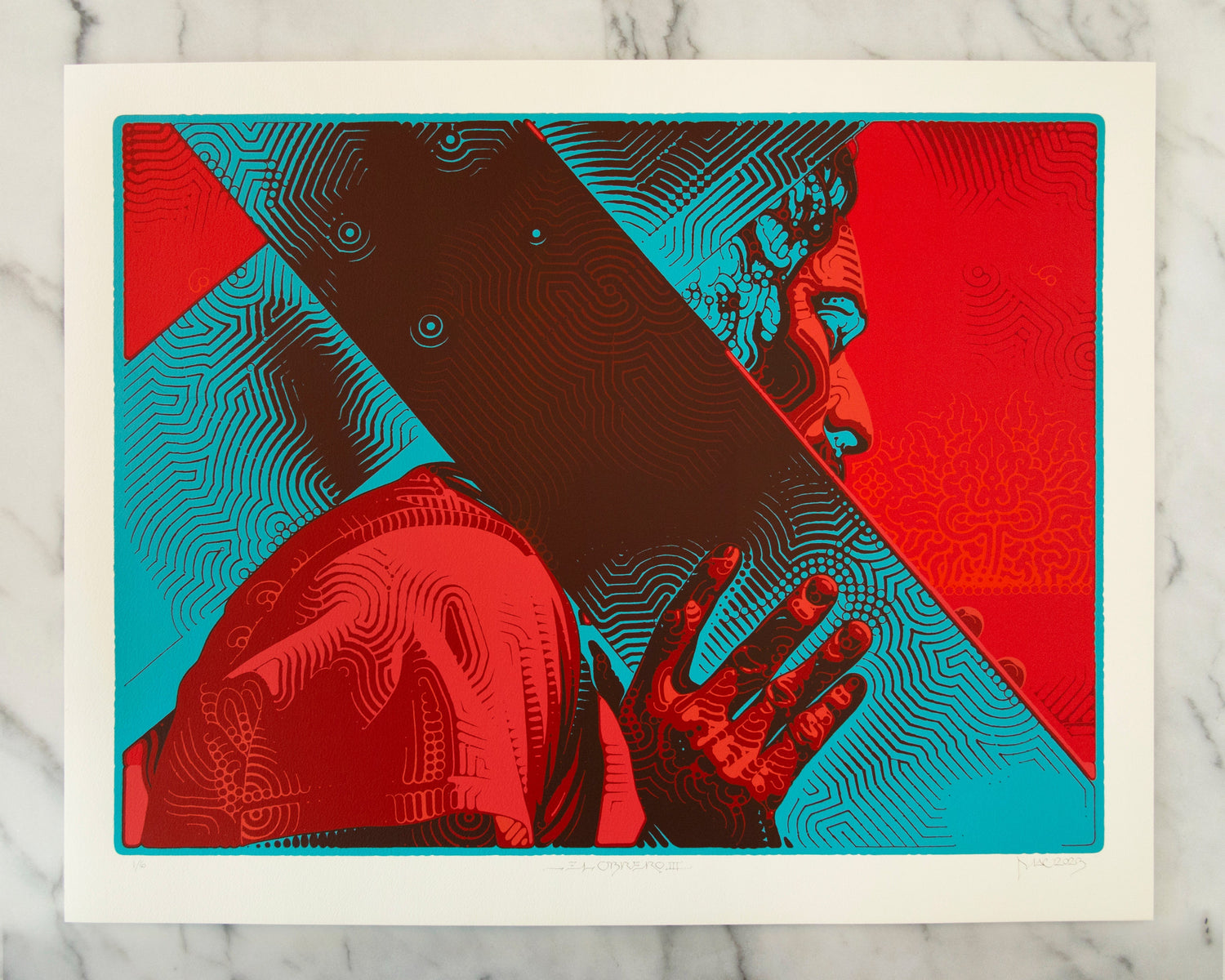
limited edition print release - August 28

NOLI TIMERE
New upcoming print inspired by an original photograph of the Art Nouveau greatest of all time, Alphonse Mucha, with special thanks to Marcus Mucha, director of The Mucha Foundation based in Prague, Czech Republic.

Alfons Mucha - Art Nouveau's Greatest
Mucha began to take photographs in the early 1880s, probably in Vienna, with a borrowed camera. It was not until he had gained some recognition in Paris and sufficient funds that he purchased his first camera. Mucha’s photographic output grew dramatically after his move to a large studio in the rue du Val de Grâce in 1896. In the new studio, where he had considerably more light thanks to large windows and a glass ceiling, he photographed on a virtually daily basis.

Between 1896 and the early 1900s Mucha made a remarkable series of photographs of the models posing for him. The use of photography as an inexpensive medium for preliminary studies was common among Mucha’s Parisian contemporaries. However, Mucha’s photographs are more than just an alternative to sketches because they also capture the inimitable atmosphere of Mucha’s studio – a world of art in its own right. It was in his studio that that Mucha entertained countless Parisian artists, writers and musicians. It was also the setting for one of the earliest cinematic projections given by the Lumière brothers, whom Mucha had met in 1895, and for psychic experiments with Camille Flammarion and Albert de Rochas. In the background of the studies of models, examples of Mucha’s work may be seen, surrounded by his collection of objets d’art, books and furniture, many of which survive to this day.
The majority of Mucha’s Parisian photographs were not taken for a specific project – he preferred to improvise a number of poses in front of the camera, creating an archive of variants from which he could select what he considered most suitable for the subject of each new commission. However, some photographs were obviously directed, with his friends and models posing as characters for book illustration. Later this practice grew into a part of his experimentation with his models to express his philosophical ideas through theatrical poses and gestures.
Mucha’s theatrical approach culminated in his preparatory work for theSlav Epiccanvases. Before working on each canvas Mucha produced numerous staged photographs documenting costumed models posing under his ‘theatre’ directions. From these photographs he selected appropriate images and synthesised them to create a complicated historical event on a single canvas. Although the images were intended as studies for his final paintings, Mucha’s approach to image-making has much in common with filmmaking.
TEXT AND IMAGES FROM THE MUCHA FOUNDATON

Artist's Statement:
"Noli Timere" means "be not afraid" in Latin. Of course fear is always with us, and some fear can be necessary, but it's also clear that we live in a time when there's an excessive amount of anxiety and confusion, where fears are exploited for the sake of power, control, and wealth. Fear of precarity and fear of the 'other' are used to justify brutality and killing. We're propagandized and persuaded to fear and scapegoat immigrants and poor people—the 'least of these'—while even little children and our own neighbors are dehumanized. Hopefully we can prioritize love and mutuality over fear and division.
'The purpose of my work has never been to destroy but always to create, to build bridges, because we must live in the hope that humankind will draw together, and the better we understand each other the easier this will become. I will be happy if I have contributed in my own modest way to this understanding...'
The great artist Alfons Mucha—one of my biggest influences—wrote this in 1929 upon presenting his magnum opus, the Slav Epic, to the public. Mucha had dedicated himself to this monumental series of 20 mural-sized paintings for nearly two decades with a heroic amount of work and idealism, in hopes of uplifting the Slavic people and inspiring resistance to Germanic imperial rule. The work was greeted by distaste and confusion from critics, then hidden from the Nazis when they invaded and occupied Czechoslovakia in 1939 (Mucha passed away shortly after being detained and interrogated by the Gestapo). Then after WW2 the Slav Epic was disregarded by the Communists for many years but eventually put back on display in the 1960s, and I consider the series to be some of the most beautiful and powerful paintings ever made. I've loved them since seeing them in books as a kid, and was fortunate enough to go see them in Brno in 2018. I think they’re some of the most amazing mural sized paintings ever created and I’m still inspired by the passion and love that went into them. Those paintings as well as his posters show the extent to which he strove to reach everyday people, to share with others the profound love that went into his art, and I'd like to think I share some of that same love and spirit in my own art for the public.
One of the main themes motivating Mucha's work, and my own as well, is the desire to uplift through beauty, and the idea that beauty can be an expression of goodness. We share a belief in the transformative power of beauty and art, and a faith that everyone no matter how humble, and every element of nature, carries some spark of divinity. Mucha's idealism and desire to uplift humanity through art and beauty is something that resonates with me and I've tried to carry that forward in my own work.
One of Mucha's many photos of anonymous local townsfolk that he used for painting reference in the Slav Epic was a photo of an unknown Bohemian woman. This woman, photographed in 1914, could've just as easily represented a Slavic peasant woman as a soon-to-be expectant mother in the Levant 2000 years earlier. If some angelic being visited such a woman with assurances to 'be not afraid', perhaps the woman could've looked somewhat like this...
I recently made a painting based on this image, intended partly as an homage to Mucha, and these prints are adapted from that painting. I hope they convey a sense of grace and beauty, and at the risk of sounding grandiose, maybe even some small trace of the eternal:
'[The artist] will find no peace until he succeeds in communicating the emotions of his own soul to the souls of others, even at the price of laborious work, and his greatest joy will be that of seeing other souls also vibrating with the happiness of his emotion.'
-Alfons Mucha "
- EL MAC


release date: August 28, 2026 @ 10am PST - please come back to ELMAC.ART on this date to purchase
Pricing
Noli Timere
edition of 27
grey on cream
$475
Noli Timere II
edition of 14
cobalt blue on cream
$550
Noli Timere III
edition of 11
green on cream
$625
Noli Timere IV
edition of 10
black on sky blue
$750
Noli Timere V
edition of 8
dark red on sky blue
$775
Noli Timere VI
edition of 7
dark blue on sky blue
$800
Collections
-
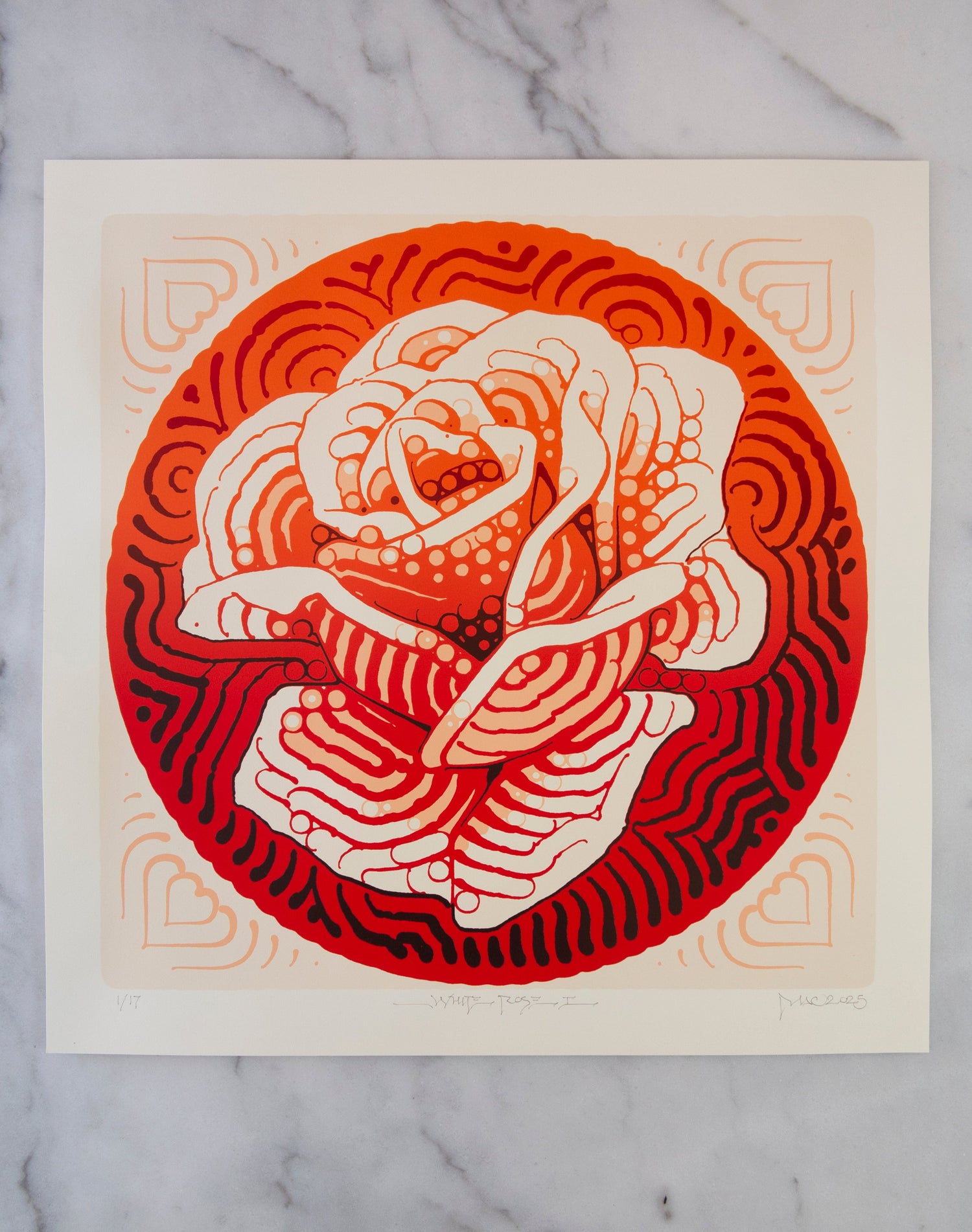
WHITE ROSE
Artist Statement: White Rose"In 1891, Cuban anti-imperialist revolutionary José Martí published a book...